Technical Summary & Field Standards
When you need primer, when one coat is enough and when to plan three. How each choice changes the gallons for a room, with a decision table and an example.
Plan on two coats of paint for almost every wall. Add a coat of primer over new drywall, patches, stains, glossy surfaces and big color changes. Skip primer only when you’re repainting sound, clean walls in a similar color. One coat is enough only for a same-color refresh on walls in good shape.
What each plan takes for a 12 × 12 room
8 ft walls, one door and one window (348 sq ft of wall), paint at 350 sq ft per gallon, primer at 300:
| Plan | Paint to buy | Primer to buy |
|---|---|---|
| One coat, same color refresh | 1 gal | none |
| Two coats, no primer | 2 gal | none |
| Primer + one coat | 1 gal | 1 gal + 1 qt |
| Primer + two coats | 2 gal | 1 gal + 1 qt |
| Three coats (strong color change, no primer) | 3 gal | none |
The paint calculator has a primer switch and a coats field, so you can run your own room. For room-by-room totals, see how much paint a 12 × 12 room needs.
When you need primer
| Surface or situation | Primer? | Why |
|---|---|---|
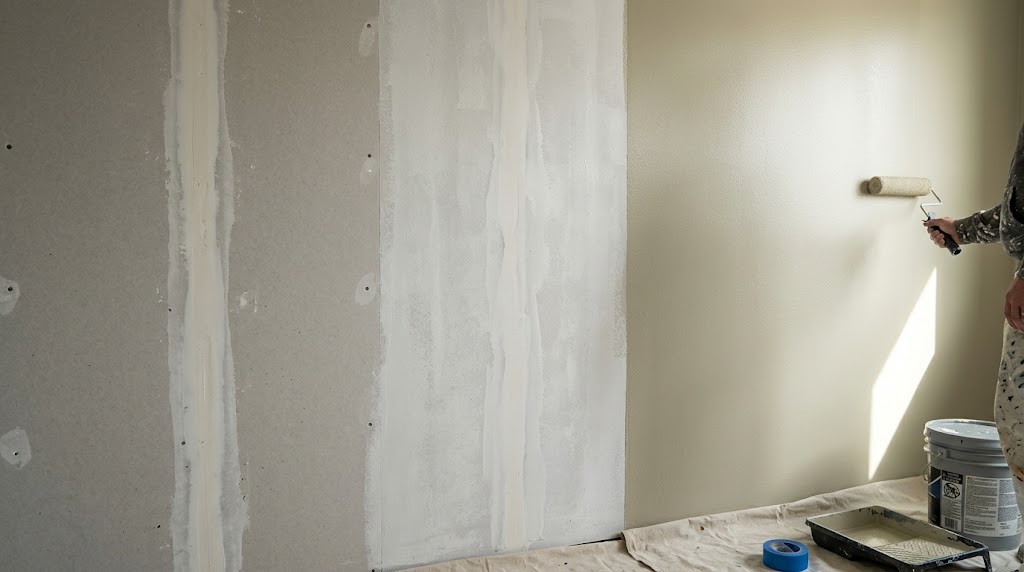
| New drywall or skim-coated walls | Yes, drywall primer | Paper and joint compound absorb paint unevenly; without primer, seams show through (flashing) |
| Patched holes and repaired areas | Spot-prime | Fresh compound soaks up paint and looks dull |
| Water stains, smoke, marker | Yes, stain-blocking | Stains bleed through latex paint, sometimes after it dries |
| Glossy paint or varnished wood | Yes, bonding primer | New paint doesn't grip a slick surface; scuff-sand first |
| Bare wood | Yes | Seals the grain; some woods bleed tannin |
| Dark color to light | Usually | A primer coat hides the old color faster than extra topcoats |
| Light color to deep color | Often, tinted | Gray or tinted primer helps deep colors cover in two coats |
| Clean, sound walls, similar color | No | Two coats of finish paint are enough |
What about “paint and primer in one”?
These products are thicker, higher-solids paints. On previously painted walls in decent shape they can save a coat. They aren’t a substitute for a real primer over new drywall, stains, glossy surfaces or bare wood, and their labels often say so. Their stated coverage per gallon is frequently lower than ordinary paint, because they go on heavier.
Why the second coat matters
A single coat rarely reaches the film thickness the manufacturer designed for. The first coat soaks into the surface and leaves thin spots, and roller marks and lap lines show. The second coat evens out the color and sheen and gives the durability the label promises. On a same-color refresh with quality paint, one coat can be fine; anywhere else, plan two and be pleasantly surprised if you don’t need the second gallon.
Coverage drops on rough and porous surfaces
Label coverage (often 350 to 400 sq ft per gallon) assumes a smooth, sealed surface. Expect less on:
- Unprimed drywall and plaster, which soak up the first coat.
- Textured walls and ceilings, which have more actual surface than their flat area.
- Masonry and stucco, which can cut coverage by half or more.
A primer coat seals the surface so the topcoats spread at their rated coverage. That’s why primer + two coats often uses less finish paint than three coats on raw surfaces.
Worked example: a new drywall room
A 12 × 12 ft room just drywalled, walls and ceiling: about 492 sq ft. Primer at 300 sq ft per gallon, then two coats at 350:
- Primer: 492 ÷ 300 = 1.64 gal → 2 gal
- Paint: 492 × 2 ÷ 350 = 2.81 gal → 3 gal (ceiling and wall paint bought separately in practice)
Tint the primer toward your wall color if the store offers it. It helps the first topcoat cover evenly.